
Overview
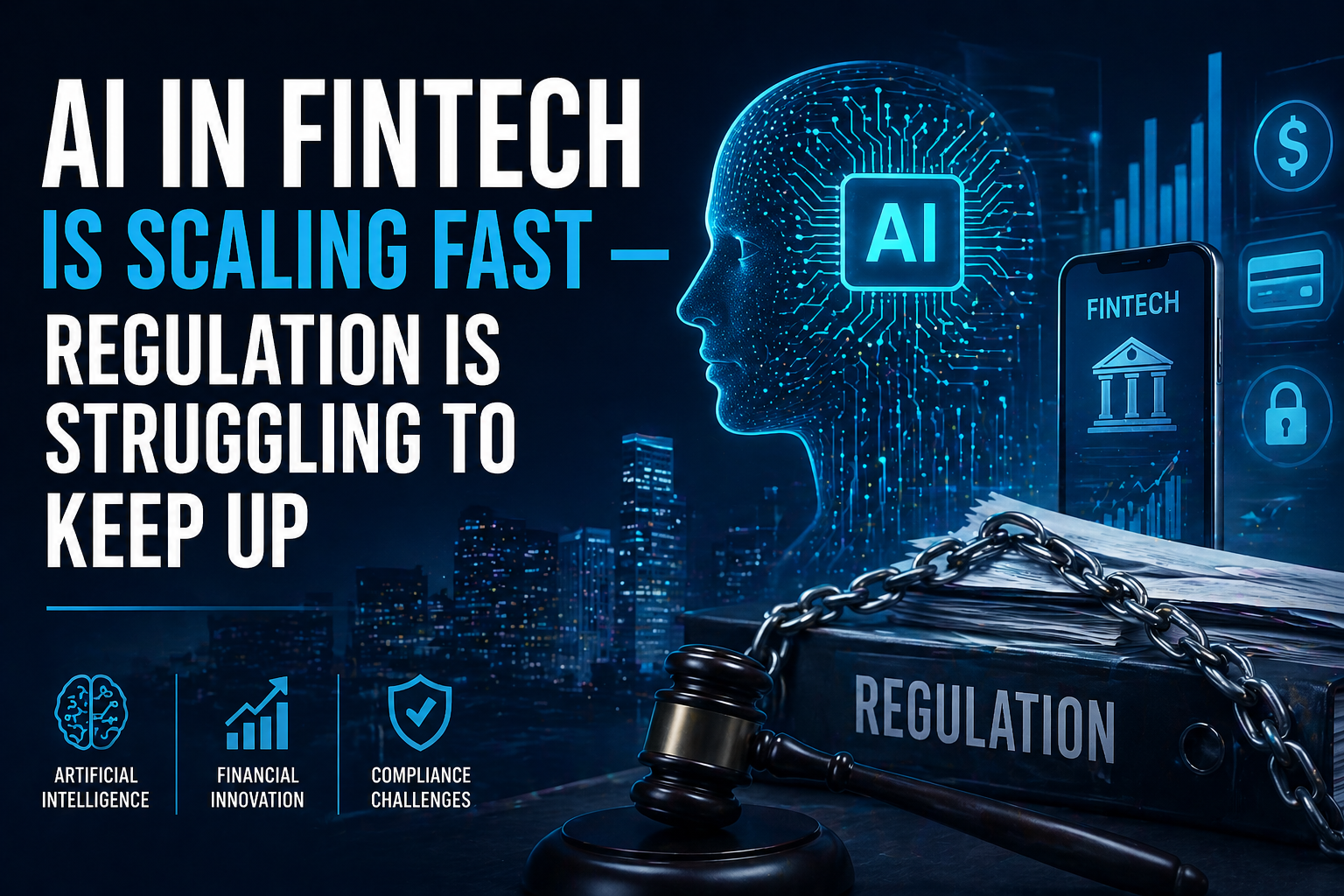
Artificial intelligence is rapidly becoming core to financial services from fraud detection to credit scoring and automated advisory.
But while adoption accelerates, regulation is fragmented and reactive.
The result: a widening gap between innovation and oversight.
Where AI Is Being Used
Fintech firms are deploying AI across:
- Credit risk assessment
- Fraud detection systems
- Customer service automation
- Algorithmic trading
These systems often rely on:
- Large-scale data ingestion
- Continuous learning models
Which creates regulatory blind spots.
Core Regulatory Challenges
1. Accountability & Liability
When an AI system makes a financial decision:
- Who is responsible?
- The developer?
- The fintech firm?
- The data provider?
Under emerging frameworks like the EU AI Act, firms may be required to:
- Classify AI systems by risk
- Maintain human oversight
- Document decision logic
2. Auditability & Explainability
Many AI models operate as “black boxes.”
Regulators are increasingly demanding:
- Explainable outcomes
- Audit trails
- Model validation processes
This is particularly critical in:
- Lending decisions
- Fraud flags
- Insurance underwriting
3. Bias & Discrimination Risk
AI systems can unintentionally replicate bias present in training data.
Regulatory focus areas:
- Fair lending practices
- Non-discrimination compliance
- Transparent model training
Failure here could lead to:
- Legal penalties
- Reputational damage
The Rise of RegTech
To manage these risks, fintech firms are investing in RegTech (Regulatory Technology):
- Automated compliance monitoring
- AI governance tools
- Real-time reporting systems
This indicates a shift toward:
Embedding compliance directly into technology infrastructure
What Comes Next
Expect regulators globally to:
- Introduce stricter AI-specific rules
- Increase enforcement actions
- Require third-party audits of AI systems
Jurisdictions to watch:
- EU (leading with formal AI regulation)
- UK (principles-based approach)
- US (sector-specific oversight)
Bottom Line
AI is transforming fintech but without clear regulatory alignment, it introduces systemic risk.
The firms that win will not just build better AI but more accountable AI.










+ There are no comments
Add yours